
ChatGPT Misread the Signature. Then It Invented the Artist.
Article by Adam Zimmerman, Estate & Antique Expert
4.2.2025
Quick Summary (TL;DR)
1. AI can be helpful for organizing your thoughts, generating checklists, and suggesting what details to photograph or measure. But it can also make confident-sounding mistakes about signatures, artists, materials, and value.
2. In the case study below, ChatGPT first misread a signature, then made unsupported claims about the artist’s background and market, and only later admitted those claims were assumptions.
3. Paid AI tools and reasoning modes can be better than free or “fast” modes because they often offer stronger image handling, deeper reasoning, and better tool access. But they still should not be trusted blindly. ([OpenAI Help Center][1])
4. The safest way to use AI is to ask for sources, independently verify those sources, and treat the AI’s answer as a starting point, not a conclusion.
5. If you are making decisions about selling, dividing, donating, or insuring art, antiques, or jewelry, a live consultation can save you from expensive mistakes.
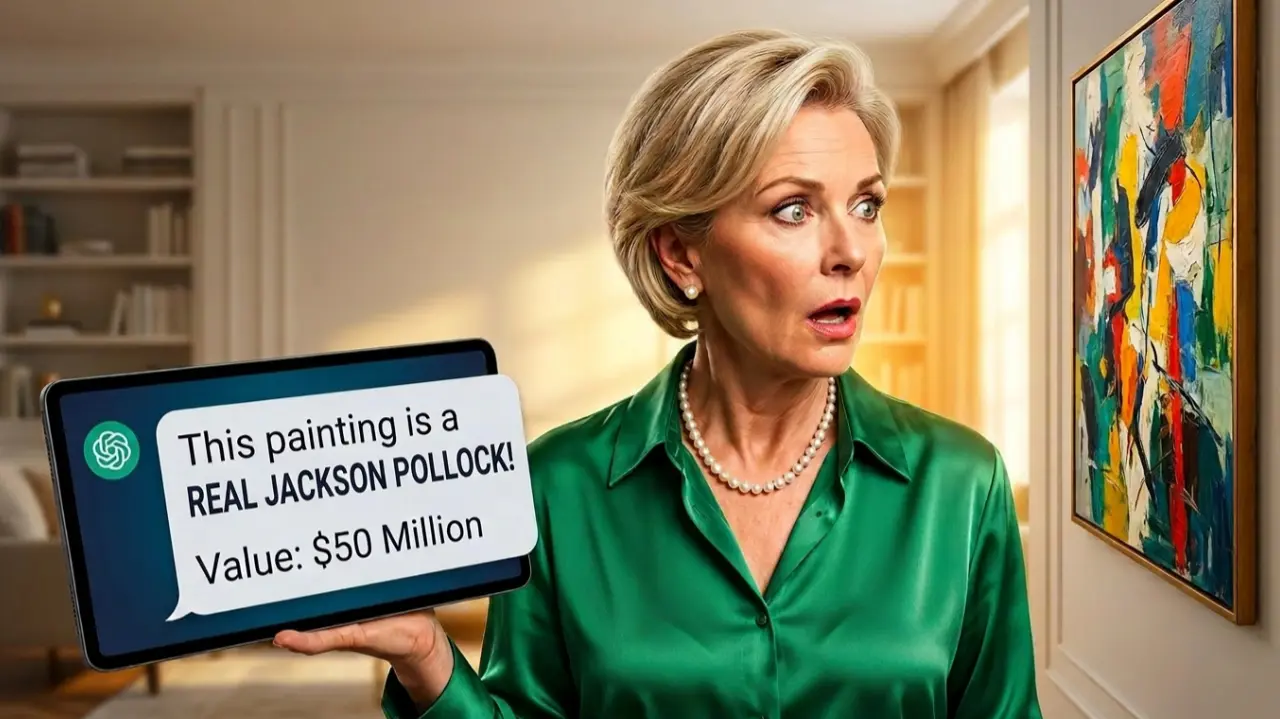
You upload a photo of a signature on a piece of art. You ask ChatGPT to help identify it.
At first, this feels like exactly the sort of thing AI should be good at. The handwriting is hard to read. The internet is huge. The answer should be just a few prompts away.
And sometimes AI does help.
But sometimes it does something much more dangerous: it guesses. Then it builds a whole story around the guess.
And if you do not slow down and challenge it, that story can start to feel like fact.
That is exactly what happened in a recent exchange involving a signature on a work of art.
This post is a follow-up to our earlier article on the hidden risks of AI valuations. There, we talked about why tools like ChatGPT can sound authoritative while still being badly wrong. This new example shows that risk in action. The earlier post explained that AI can miss condition, provenance, authenticity, and current market reality, and may also “hallucinate” details or price guidance that should not be trusted without verification.
You can read the entire post here:

Can You Trust ChatGPT to Price Your Antiques? The Hidden Risks of AI Valuations
Read More…
The case study: a signature, a hallucination, and a slippery slope
Here is the simple version of what happened.
I uploaded a close-up image of a signature on a work of art and asked ChatGPT to identify it.
Step 1: The first reading was wrong
The model first read the signature as: “Searing / Monley Sellman”
That was already a problem.
The first word was likely being treated as the title of the piece. The last name was not clearly supported. The first name was also shaky. But the response sounded composed and plausible.
That is the first danger with AI: it often presents uncertainty in a polished tone that feels more reliable than it actually is.
Step 2: A correction pushed the model onto a new track
I then suggested a different reading: “Mark Gellman”
Instead of slowing down and saying, “Possible, but unconfirmed,” the model latched onto that new name and moved quickly into biography and market commentary.
It then stated, in substance, that:
√ Mark Gellman was a “contemporary American artist”
√ he was known for “spiritual and abstract themes”
√ he had “gallery representation and a following”
√ his works traded in a certain resale range
√ the piece was likely decorative fine art, not blue-chip material
That is a lot of confidence built on very little.
Step 3: The sourcing did not support the claims
When I asked for references, the model could not produce a real official website. Instead, it pointed to what it described as a Facebook profile that “appears to be his.”
That is not serious documentation.
Then, when pressed further about how it knew the artist specialized in spiritual themes, the model admitted it “should not have stated that as fact” and acknowledged that it had made a “stylistic inference,” not a verified identification.
That admission matters. It reveals the core issue:
The model was not working from confirmed evidence. It was building a likely-sounding narrative around visual impressions and name suggestions.
Step 4: The guesswork kept going
Even after admitting it had made unsupported assumptions, the model continued proposing alternate readings:
√ Mark Selman
√ Markee Selman
√ Markee Gellman
Some of that may sound reasonable. Hard-to-read signatures are hard to interpret. But that is exactly the point.
Once a model is in speculative mode, it can keep producing more and more possibilities that sound thoughtful, organized, and useful, while the actual factual foundation remains thin.
For someone downsizing a home, settling an estate, or deciding what to keep, sell, or insure, that is a real decision-making obstacle.
Why this matters so much in the real world
If you are handling your parents’ estate, cleaning out a Florida condo, downsizing from the City, or trying to make smart decisions before your children get involved, you do not need a beautiful theory.
You need the truth.
And in the antiques, art, and jewelry world, the truth often depends on details AI cannot reliably establish from one photo and a few prompts:
→ Is the signature actually being read correctly?
→ Is the work original, a print, or a reproduction?
→ Is the artist real, listed, regional, decorative, obscure, or misidentified?
→ Is there a gallery label, publisher mark, framer’s tag, or edition number on the back?
→ Is the work damaged, fixed, restored, or heavily faded?
→ Is there any actual resale market for it?
→ Is the likely value in the hundreds, the thousands, or mostly sentimental?
When AI gets one early step wrong, the later steps can become nonsense dressed up as expertise.
The real lesson from this exchange
The lesson is not “never use AI.”
The lesson is this: AI is good at producing language. It is not automatically good at producing truth.
That distinction matters.
A model can be helpful in these ways:
→ suggesting what details to photograph
→ explaining what provenance means
→ giving you a checklist for researching a painting, brooch, or porcelain mark
→ helping you phrase searches more effectively
But when it comes to identification, authenticity, and value, you have to keep a firm grip on reality. Because AI can do all of the following in a single chat:
√ misread a signature
√ accept a user’s suggestion too eagerly
√ invent a biography
√ imply a market that may not exist
√ backtrack when challenged
√ then continue speculating anyway
That is not what you want to rely on when real money or family decisions are involved.
A few more examples of how this can go wrong
The art signature example is not unusual. The same pattern shows up in other categories too.
Example 1: Jewelry
You upload a gold bracelet with a karat mark — and ask AI for an assessment.
The AI notices a yellow gold color, and an old-fashioned setting. It tells you the mark is real, and even adds that it’s 18 karat.
Reality check: AI cannot tell if the karat mark is genuine or assess the weight of the actual piece itself. Only a live expert can verify this all-important information.
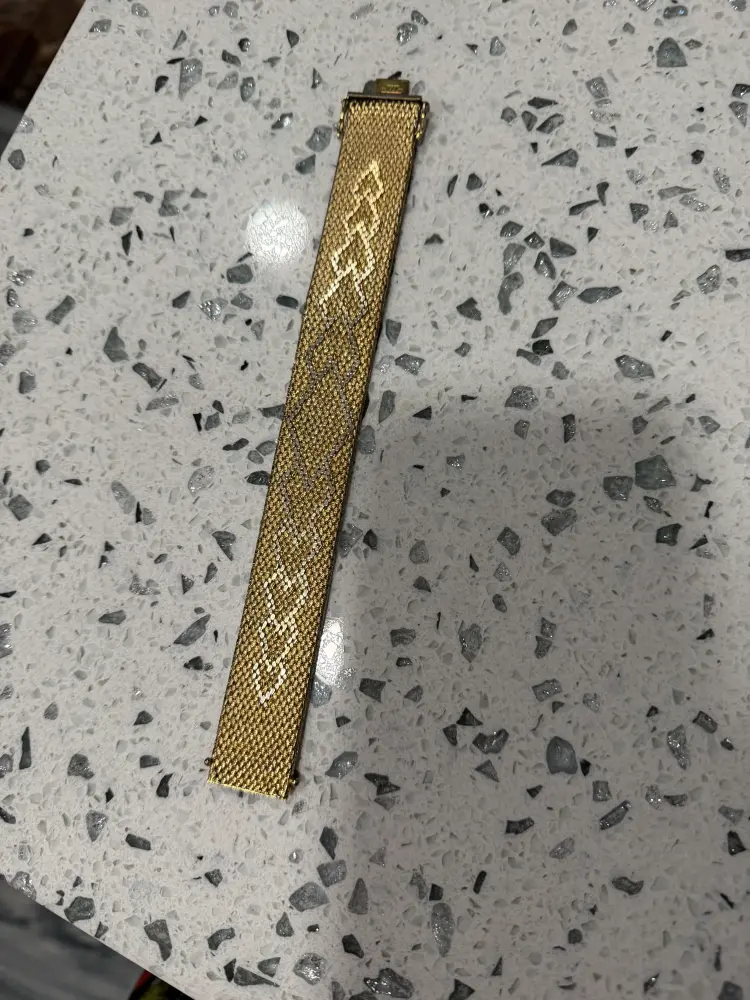
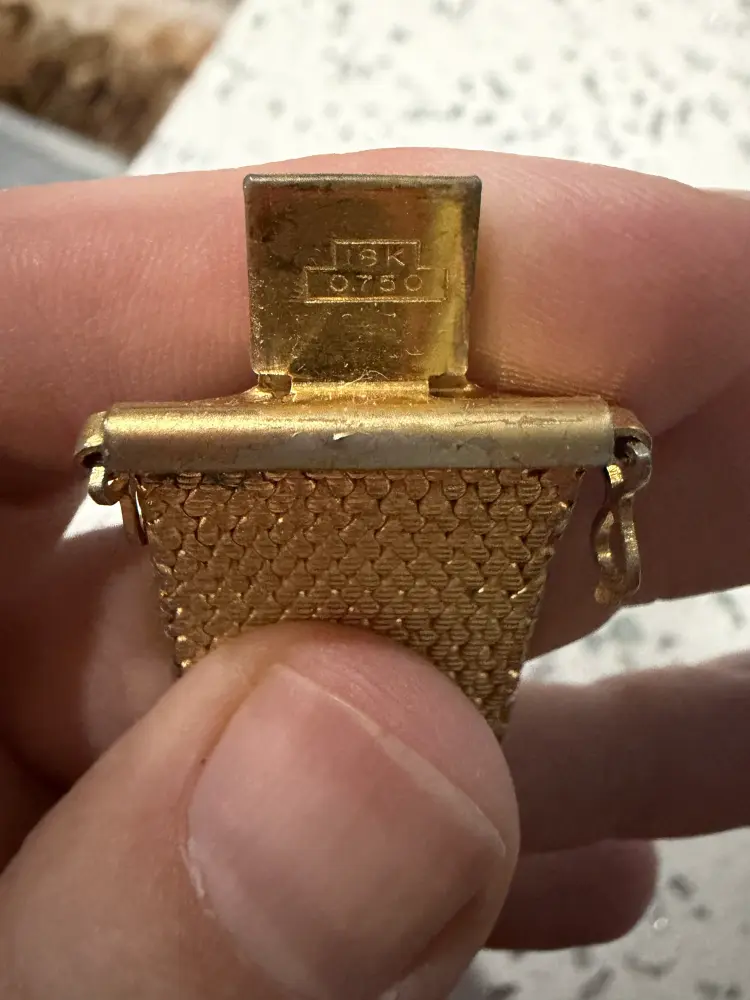
If you hand that down to your children as a major heirloom, insure it at the wrong number, or reject a fair offer because AI made it sound grander than it is, the error now has real consequences.
Example 2: Silver
You ask AI about a tea set and it gives you a price range based on sterling silver comps.
But your set is silverplate.
That one missed detail can swing value dramatically.
For another example of AI providing incorrect information regarding a precious metal — this time, gold — take a look at the video below:
Example 3: Chinese Antiques
You upload a blue-and-white vase and ask if it is Ming.
The AI sees crackled glaze, a reign mark, and the right overall shape, and says “yes.”
But the mark is non-verifiable, the decoration is later, and the vase is a 20th-century decorative reproduction.
Again, the language may sound polished. The conclusion may still be wrong.
How to use AI more safely when researching antiques, art, or jewelry
1. Use it for structure, not certainty
Ask questions like:
• What details should I photograph before researching this painting?
• What marks should I look for on antique silver?
• What affects the value of estate jewelry?
• What should I check on the back of a framed artwork?
Those are good AI questions.
Questions like “What is this worth?” or “Who is this artist?” are much riskier unless you verify everything that follows.
2. Ask for sources every time
Do not settle for a neat paragraph. Ask:
• What are your sources?
• Are these live sources or general knowledge?
• Which statement in your answer is verified, and which part is inference?
• Show me the exact auction records, gallery pages, or museum references you are relying on.
If it cannot show real sources, you do not have a reliable identification.
3. Independently verify the sources
Even when the model provides sources, check them yourself. Look for:
• reputable auction houses
• actual sold results, not asking prices
• official artist or gallery sites
• recognized art databases
• clear mark references
• consistent image matches
A source that merely “looks related” is not enough.
4. Use a paid version if you are serious
If you are going to use AI for research help, the paid versions are usually a better choice than the free ones.
Why?
Because paid plans often provide broader access to more capable models, higher usage limits, and additional tools. OpenAI’s help materials, for example, say paid tiers offer expanded access to “thinking” models and advanced tools, while certain higher-capability reasoning options are available only on paid tiers.
That does not mean paid AI is trustworthy by default.
It means you may get:
√ stronger image and file handling
√ better reasoning on ambiguous questions
√ more room to keep refining a research trail
√ fewer rushed answers caused by lighter or more limited settings
Think of it this way: if you are trusting a tool to help you sort through family property, use the best version available. But still verify everything.
5. Turn on “Thinking” mode, or the equivalent
On platforms that offer a deeper reasoning mode, use it. OpenAI’s help materials describe Thinking mode as intended for more complex tasks and longer reasoning.
That matters because antiques and art questions are usually not simple.
They often involve:
√ ambiguous signatures
√ partial information
√ condition variables
√ material uncertainty
√ fake-versus-real distinctions
√ shifting markets
A model that reasons longer may do a better job of slowing down, acknowledging uncertainty, and separating verified facts from guesses.
But again, it is still a tool. Not a substitute for judgment.
6. Tell the model to separate facts from inference
This is one of the best prompts you can use:
“Please separate your answer into three sections:
1. what you can verify,
2. what is only a possibility, and
3. what additional photos or information would be needed before reaching a conclusion.”
That prompt alone can reduce a lot of trouble.
When AI is especially risky
One more trap that causes a lot of unnecessary confusion: out-of-date appraisals.
Even the best appraisal becomes unreliable over time because markets move — sometimes slowly, sometimes violently. So if you’re holding an appraisal from years ago, don’t use it as a pricing reference today, regardless of whether it’s an insurance appraisal, fair market appraisal, or liquidation value.
A Practical "Before You Hire" Checklist
Be extra careful if:
→ you are handling an estate
→ siblings may disagree on value
→ you are deciding what to sell, donate, or keep
In those situations, a human review is often the cheaper choice in the long run.
What a live expert sees that AI often misses
A real expert can slow the whole process down and ask the questions that actually matter:
√ What does the back look like?
√ Is there a label under the lamp base or behind the frame?
√ What are the exact measurements?
√ Is that wear, damage, or age?
√ Is this something the market actively wants?
√ Is this family treasure, decorative object, or sell-now inventory?
√ What is the best venue if you do decide to sell?
That is where real clarity comes from — not from a beautifully written guess.
The bottom line
If you use ChatGPT or another LLM to research your antiques, jewelry, or art, do it with your eyes open.
- Use it to get organized.
- Use it to build a checklist.
- Use it to generate smarter search terms.
- Use it to tell you what else to photograph.
But do not let it quietly turn a guess into a “fact.”
That is what happened in the case study above.
The model started with a misread signature. It then attached an unverified identity to the piece. It made unsupported claims about the artist’s style and market. It later admitted those claims were assumptions. And then it kept speculating.
That is exactly how people get misled.
If you are trying to make sense of what is in your home, your parents’ home, or a family estate, you do not need more noise.
You need a calm, experienced eye that can help you separate:
→ real value from wishful thinking
→ promising clues from flimsy guesses
→ family keepsakes from resale inventory
→ and internet chatter from actual market reality
That is the work.
And that is where a good consultation can save you a lot of money, stress, and second-guessing.
Quick Answers (FAQ)
1. Can ChatGPT identify an artist from a signature?
Sometimes it can suggest possibilities, but it can also misread the signature and build an entire answer around the wrong name. Always ask for sources and verify them independently before trusting the result.
2. Is a paid AI version better than a free one for antique research?
Usually, yes. Paid versions often provide access to stronger reasoning tools, better limits, and more advanced features. But even the better versions can still make unsupported claims, so they are not a substitute for verification.
3. What is the safest way to use AI when researching antiques or art?
Use it to learn what details matter, create a research checklist, and generate follow-up questions. Then ask for sources, verify them yourself, and get human help if the item may be important or valuable.
4. Why do AI answers about value go wrong so often?
Because value depends on condition, authenticity, provenance, current market demand, and exact identification. AI can describe patterns in language, but it cannot reliably inspect your actual object or confirm every factual step. That limitation is the same concern discussed in Antique Help®’s earlier article on AI valuations.
5. When should I stop researching on my own and talk to Adam?
When the item may have meaningful value, when the signature or mark is unclear, when family decisions depend on the answer, or when you feel yourself drowning in conflicting internet information. A short consultation can often save you from a much costlier mistake.
Final Thought
Want to go deeper?
- Get your copy of Antique Help: Making Sense So You Can Make Some¢ents at antiquehelpbook.com
- Contact: [email protected]
- Catch the latest videos from Antique Help® here: youtube.com/@antiquehelp
